What we want to make is trying to tell us something.
Christopher Chapman is an artist and teacher. He's spent his life helping people listen. Lately, he's been listening to himself.
As a child, Christopher Chapman was selected for Creative Learning Resource, a pilot program built around creativity and how children learn. It left him with a question he has spent much of his life exploring:
Why do so many of us lose touch with our creativity as we grow up, and what does it take to find our way back?
That question followed him to art and design school, where he became as fascinated by psychology and sociology as human centered design. Creativity and human connection became the two threads of his life’s work.
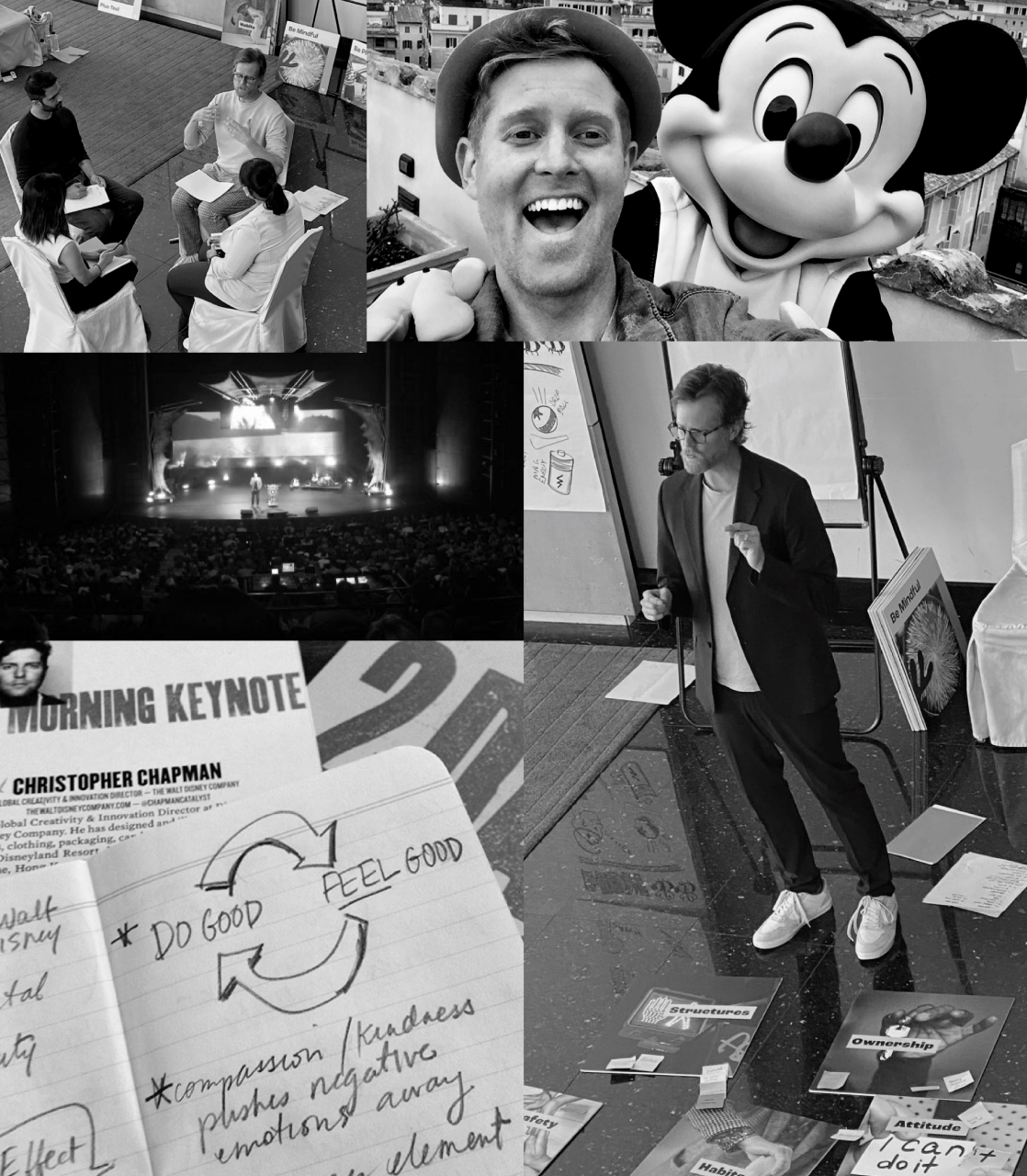
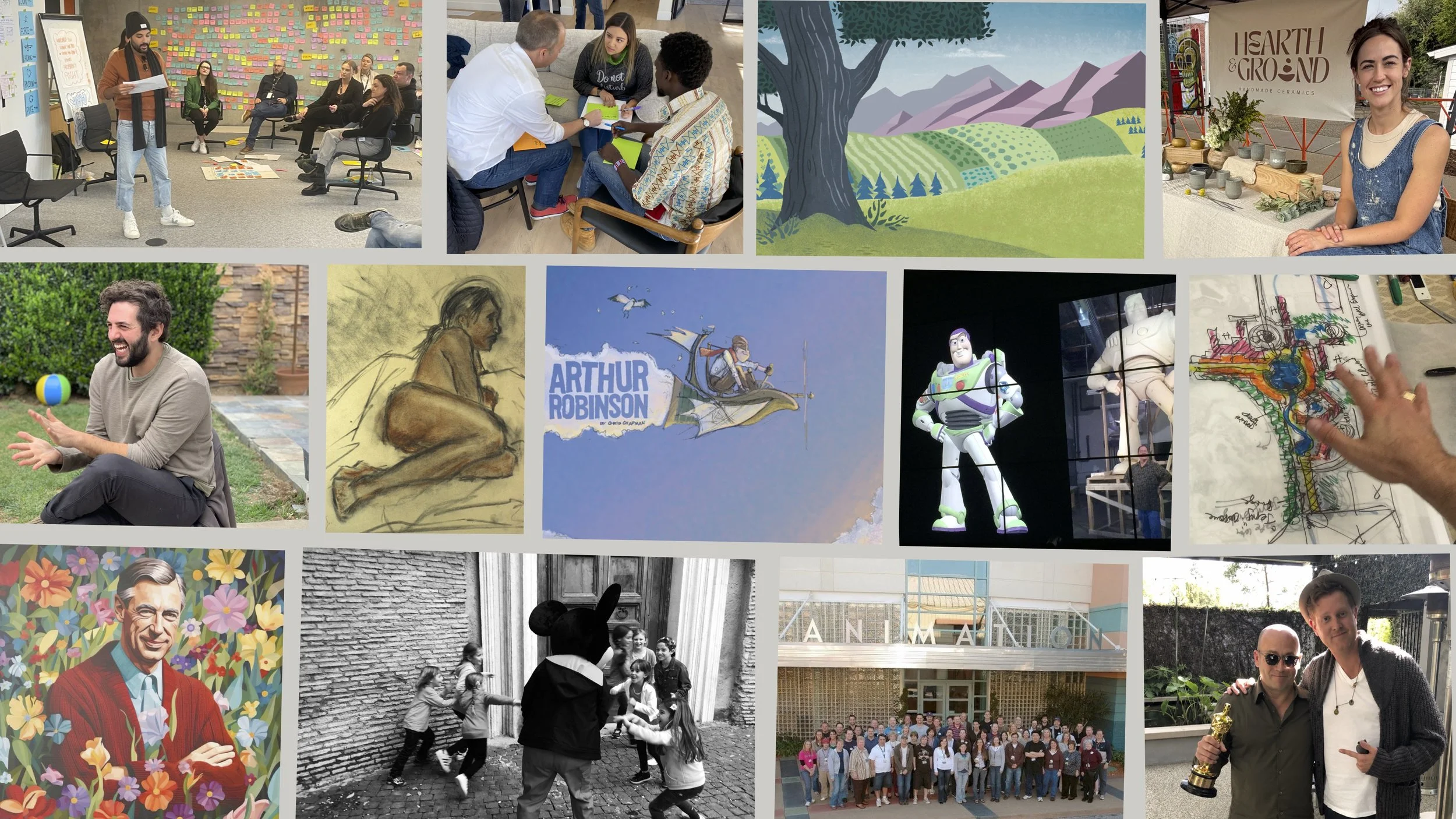
Christopher spent nearly 20 years at Disney, beginning as a designer, becoming an art director, and eventually serving as Disney’s first Global Head of Creativity and Innovation. His projects ranged from reimagining legacy brands like Mickey Mouse to creating new products and experiences for Pixar films and Disney Parks. Along the way, he kept noticing the same divide: the people labeled “creative” on one side, everyone else on the other. He came to believe that line was mostly imaginary. Everyone is born to create. Most of us just grow out of it.
As an executive, he loved helping brilliant creative teams shape their ideas, each artist playing an instrument within a larger vision. But nothing he made was his alone. Somewhere along the way, he had stopped playing his own violin.
After Disney, he founded the creative consultancy Imaginology, led more than 300 design sprints, and helped over 1,300 leaders across 12 countries strengthen how they create together. Most recently, he taught Design Leadership to graduate students at the University of Colorado Boulder.
Then, after years of helping other people create, Christopher asked himself a question he had rarely asked: What do I really want?
The answer was making without an audience.
It started in an art store, where he was suddenly a kid in his grade school art room again. Then came a figure drawing group, and with it the freedom he felt drawing as a child. Painting, illustration, and writing followed: creativity for no reason other than the desire to create. Somewhere in the making, parts of himself that had gone quiet began to come back.
That journey became The Quiet Part, a creative practice for adults who have spent years being who work, clients, family, and the world needed them to be, and are ready to hear themselves again. Christopher guides it as someone still on the same road, not someone who has reached the end of it.
He believes what one person makes can help another recognize something in themselves. Art becomes a way of saying, “This is how I see it,” and an invitation for someone else to consider how they see it, too.
When he isn’t doing this work, Christopher is usually painting, writing, hiking national parks with his wife, fishing, following his twin boys wherever their imaginations lead, or playing tabletop games with fellow dreamers and doers.
“Art in its best case scenario helps us understand our relationship with self and the world.”
Say hello.
Notes are delivered straight to Christopher. Tell him what you're working on, what you're curious about, or what brought you here.